DPP (Digital Product Passport) began in Europe.
It is a process that records where a product came from,
what it is made of,
how it was produced,
and how it is recovered after use.
Leather and textile products are not yet subject to mandatory adoption.
LCA (life cycle assessment) tracking will be introduced first
in sectors such as steel, automobiles, and batteries.

Since June 2024, three companies have worked together
to announce an MOU for building a DPP and have been preparing for it.
We believe DPP is not just a passing trend,
but a direction the entire industry will inevitably move toward.
That is why we are now
experimenting with connecting a QR-based DPP
even to a single recycled leather product.
The EU standard is not yet complete, but we believe preparation must begin now in order to apply it later.
We expect that in Korea as well, the government will set a standard and companies will be required to comply with it.
Since that standard has not yet been created, we see this as a transitional period.
Above all, what we believe matters right now
is not “who told us to start,”
but understanding and applying “why a product’s full life cycle (LCA) is needed.”
We do not simply want to say
that we are eco-friendly.
At the very least,
what by-products went into it,
what processes it went through,
and how it can be recirculated.
We aim to become a company that connects and records
this information, even if little by little.
We want this product to represent not just a consumer good,
but a single circular journey.
This is still a small step.
However, we believe that in the future,
what matters more than things that merely look “eco-friendly”
will be companies with structures that are truly traceable.
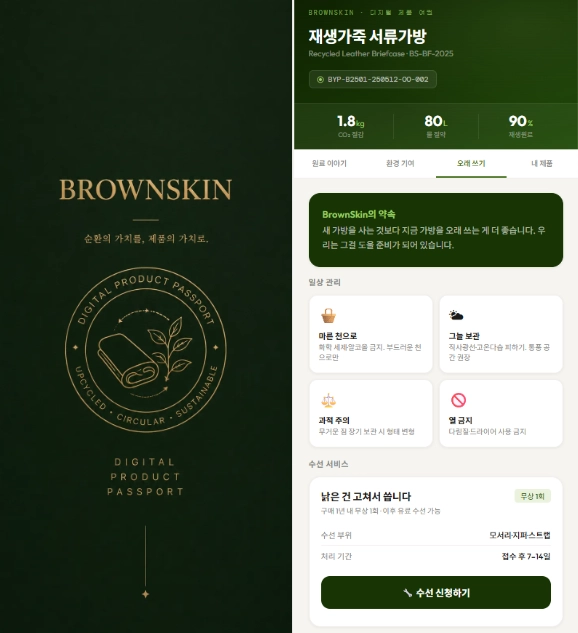
This project will be showcased at SEOUL FOOD 2026 in June and the AFPRO Alternative Food Expo in July.
You can also meet us starting with the Tumblbug campaign in June.